
The Latino Brand Export Map™: Mapping Global Expansion
- Feb 5
- 4 min read
Latino fashion brands are expanding globally. But expansion is not a single story.
The Latino Brand Export Map™ is a research framework developed by New York Latin Fashion Week to document how Latino-founded fashion brands achieve international scale. It does not track visibility. It tracks pathways: the operational, financial, and strategic routes brands take to enter and sustain presence in global markets.
This is not a list of where brands appear. It is an analysis of how they get there.
Why Traditional Export Tracking Falls Short
Most export data measures volume, destination countries, and revenue. These metrics answer where goods move. They do not explain how a brand builds the infrastructure to move them.
A brand may appear in London, Paris, or Tokyo. But the pathway to that presence varies dramatically. One brand may enter through a wholesale partnership. Another through direct-to-consumer e-commerce. A third through licensing agreements or manufacturing partnerships.
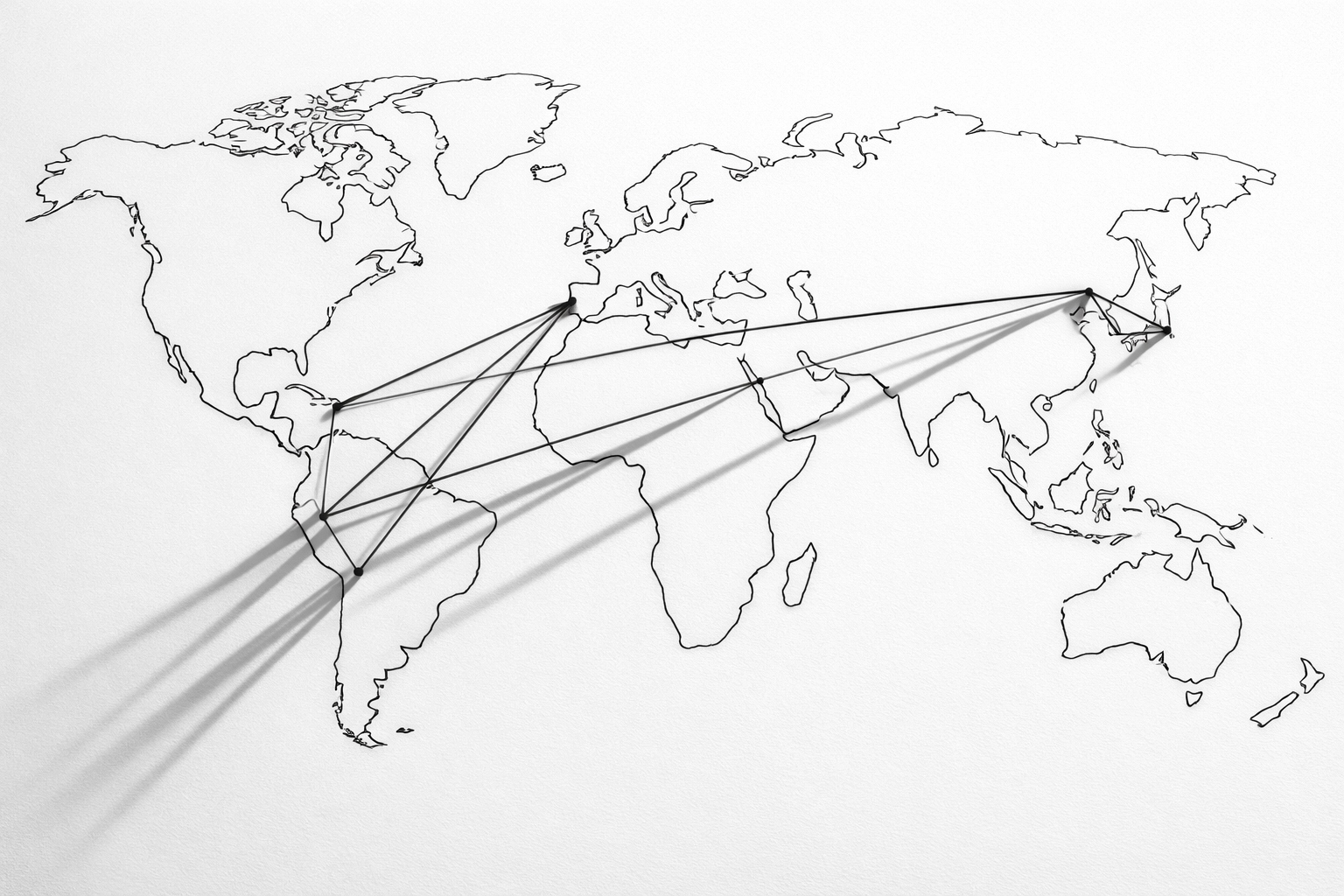
Traditional trade statistics collapse these distinctions. They report the endpoint, not the strategy.
For Latino fashion brands: many of which operate without legacy retail relationships, international credit lines, or established distribution networks: the how is the determining factor. It shapes pricing power, operational sustainability, and long-term market position.
The Latino Brand Export Map™ was built to make those pathways visible.
The Framework: Scale Is Strategic, Not Geographic
The Map operates on a core premise: scale is defined by strategy, not geography.
A brand selling in 15 countries through third-party marketplaces may have wide reach but limited control. A brand operating in three countries through owned retail and direct contracts may have deeper infrastructure and higher margins.
The Map identifies and categorizes five primary export pathways:
1. Direct-to-Consumer Digital Channels Brands build proprietary e-commerce platforms and manage international fulfillment, customer service, and logistics independently. This pathway offers control but requires significant upfront investment in technology and operations.
2. Multi-Brand Retail Partnerships Brands enter through wholesale agreements with established retailers: department stores, boutiques, or concept stores. This pathway provides credibility and access but often involves lower margins and dependency on buyer relationships.
3. Marketplace and Platform Integration Brands list products on third-party platforms like Farfetch, Net-a-Porter, or regional equivalents. Speed to market is high; brand control and customer data access are limited.
4. Licensing and Manufacturing Collaborations Brands license designs or co-produce with international manufacturers, entering markets through production partnerships rather than distribution. Common in footwear, accessories, and technical apparel.
5. Institutional and Trade-Led Export Programs Brands participate in government-backed export initiatives, trade missions, or institutional partnerships that provide subsidized access to international buyers, trade shows, or logistics support.

Each pathway carries distinct implications for cash flow, pricing structure, brand equity, and scalability. The Map does not rank them. It documents them.
What the Data Reveals
NYLFW's ongoing research has tracked over 200 Latino-founded fashion brands across 18 countries. Early findings show clear patterns:
Pathway diversity is increasing. Five years ago, most brands entering international markets did so through a single channel: typically wholesale or trade shows. Today, successful brands operate across multiple pathways simultaneously. A brand may sell directly online while maintaining wholesale partnerships and participating in institutional export programs.
E-commerce is not a substitute for infrastructure. Brands that scale solely through digital channels often plateau. Without logistics partnerships, currency management systems, or customer service infrastructure in target markets, growth stalls. The most resilient brands combine digital presence with strategic physical or institutional partnerships.
Trade-led programs accelerate entry but do not guarantee retention. Government and institutional export programs provide valuable initial access: introductions to buyers, participation in international trade shows, export financing. But brands that rely solely on these programs without building independent operational capacity struggle to maintain momentum once support ends.

Geography is not destiny. Brands from smaller Latin American markets are exporting at similar rates to brands from larger economies. What differentiates successful brands is not country of origin: it is pathway selection aligned with production capacity, pricing strategy, and long-term brand positioning.
Why This Matters for Brands
For Latino fashion brands evaluating international expansion, the Export Map provides a decision-making framework.
It clarifies the operational requirements of each pathway. A brand considering direct-to-consumer international sales must evaluate fulfillment costs, return logistics, tax compliance, and customer acquisition costs in each target market. A brand exploring wholesale partnerships must assess margin compression, payment terms, and exclusivity requirements.
The Map also reveals when not to expand. Premature internationalization: entering markets without the operational foundation to fulfill, service, or sustain demand: damages brand credibility and depletes capital.
Scale is not inherently valuable. Strategic scale is.
What This Means for the Industry
For buyers, retailers, and institutions, the Export Map shifts the evaluation criteria for Latino brands.
Instead of asking "Is this brand in my market?" the question becomes "Does this brand have the infrastructure to operate in my market sustainably?"
A brand appearing in a market through opportunistic third-party listings is not the same as a brand operating through owned logistics, localized customer service, and long-term retail partnerships. The former signals presence. The latter signals capacity.

For trade institutions and government agencies, the Map provides a diagnostic tool. Export support programs are most effective when aligned with a brand's existing pathway and operational maturity. A brand operating primarily through DTC digital channels may not benefit from trade show subsidies. A brand with strong production capacity but limited buyer relationships may.
Effective export development matches support to pathway.
Ongoing Research
The Latino Brand Export Map™ is a living framework. As market conditions evolve: shifts in trade policy, logistics costs, platform dynamics, consumer behavior: pathways shift.
NYLFW updates the Map annually, incorporating new data on brand expansion strategies, market entry outcomes, and infrastructure development across the Latino fashion ecosystem.
This is not trend forecasting. It is structural documentation.
The goal is not to predict the future of Latino fashion exports. It is to provide the industry with a clear, research-based understanding of how brands are building that future now.
Source: NYLFW Research Updated: February 2026

Comments